
Asia-Pacific Chiropractic Journal
We celebrate those who do the work to build our collective knowledge base by researching and writing their PhD thesis. Here are some of the best:
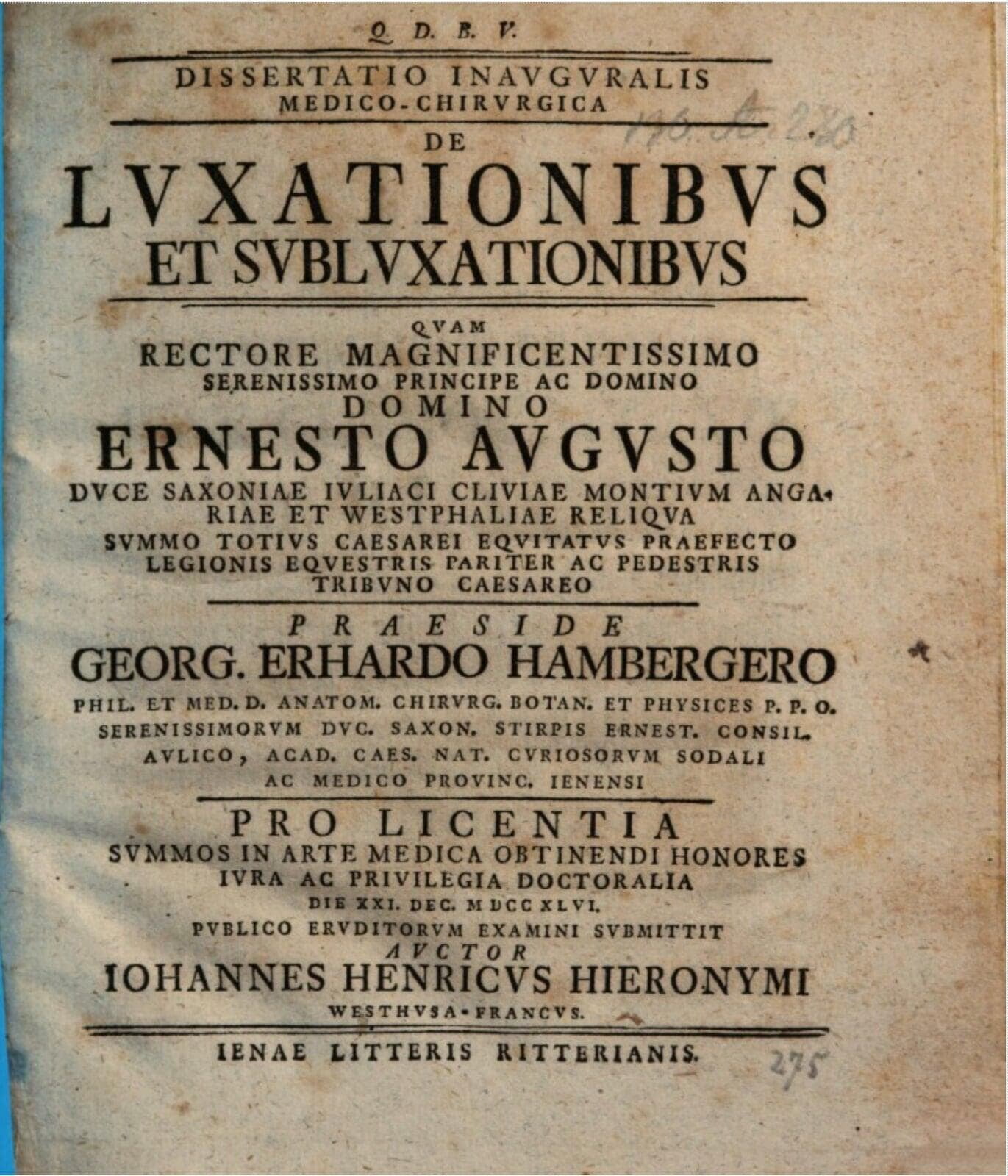
We start with the first doctoral thesis undertaken examining subluxation. This English translation is a gift on Dr Gary Bovine. Known just as 'Hieronymi' the thesis is the work of Johannes Henricvs Hieroymi, an obscure 18th Century figure about whom little is known. Like so many other theses written by new physicians, he relied on earlier works written on luxation and subluxation, citing Heister, Pare, etc. Hieronymi gives a good outline of the signs to recognise subluxation.
Hieronymi was a physician who, as a requirement for his graduation, was required to write a thesis. He chose to explore 'subluxation'. It is very much to our shame that more Chiropractors today are not choosing to write their PhD thesis on this vital topic.:
Cite: Hieronymi JH. De luxationibus et subluxationibus [thesis] Jena University: 1746.
Hieronymi
We start with the first doctoral thesis undertaken examining subluxation. This English translation is a gift on Dr Gary Bovine. Known just as 'Hieronymi' the thesis is the work of Johannes Henricvs Hieroymi, an obscure 18th Century figure about whom little is known. Like so many other theses written by new physicians, he relied on earlier works written on luxation and subluxation, citing Heister, Pare, etc. Hieronymi gives a good outline of the signs to recognise subluxation. Hieronymi was a physician who, as a requirement for his graduation, was required to write a thesis. He chose to explore 'subluxation'. It is very much to our shame that more Chiropractors today are not choosing to write their PhD thesis on this vital topic.
Cite: Hieronymi JH. De luxationibus et subluxationibus [thesis] Jena University: 1746.
Demystifying Contemporary Chiropractic Professional Identity
TANJA GLUCINA: The establishment of a clear professional identity within the chiropractic field is of paramount importance to facilitate effective collaboration, streamlined communication, and the realisation of a unified vision for the future. The utilisation of a validated instrument such as the 15-item CPIES, either as a comprehensive unidimensional scale, or by employing its component subscales to assess various aspects of CPI, can significantly expedite this process. The profound implications of gaining a deeper understanding and assessing CPI extend to enhancing career success and overall satisfaction for chiropractic professionals. This research ultimately contributes practical solutions and innovative insights into the complicated construct of CPI with far-reaching implications for practitioners, educators, and the chiropractic profession as a whole.
Cite: Glucina T. Demystifying Contemporary Chiropractic Professional Identity. [Thesis]. Auckland University of Technology. 2024. At http://hdl.handle.net/10292/18260

Daniel David Palmer's heritage and his legacy of tone to Chiropractic
DONALD McDOWALL: This investigation concluded that: influenced by his heritage, Palmer used well-thought-out strategies to promote his work which enabled chiropractic to expand exponentially; Palmer’s analogy of music to help others understand tone, has been largely overlooked; although chiropractic has flourished from its inception, the concept of tone began to wane from 1903 and by 1961 was of limited interest. This research determined that Palmer, the founder of chiropractic, is an important individual from the past who was influenced by his heritage. While Palmer’s principle of tone was the foundation for chiropractic, by 1961 his concept of tone had been largely lost, even though chiropractic continued to thrive.

The meaning and value of vitalism in Chiropractic
DENNIS RICHARDS: This study explored what vitalism means to chiropractors and what value it might offer in addressing current global prevalence of non-communicable lifestyle-related conditions. A mixed methodology design of qualitative and quantitative research methods involved interviews of 18 international key informants followed by online surveying of chiropractors in Australia and New Zealand. To a majority, vitalism meant innate intelligence, a traditional form of vitalism, a guide to a good life, and an essence of the identity of chiropractic. It offered great value in addressing non-communicable lifestyle related conditions. To a minority, vitalism meant an obsolete and unscientific doctrine of no value.

The effect of Chiropractic manual therapy on the spine, hip and knee
HENRY POLLARD: This thesis examined the effect of commonly used manual therapy protocols on the range of motion (ROM) of the hip joint. I have demonstrated that the two stretching treatments both increased hip ROM but only the spinal group was significant. These results help to document for the first time the effect of several clinical protocols used by manual therapists to increase the ROM at the hip joint. I conclude that manipulation of the hip should be considered in protocols trying to achieve increased hip ROM, and that treatment of the spine demonstrated an improvement in peripheral joint function of the hip.
The measurement and correction of sacral obliquity
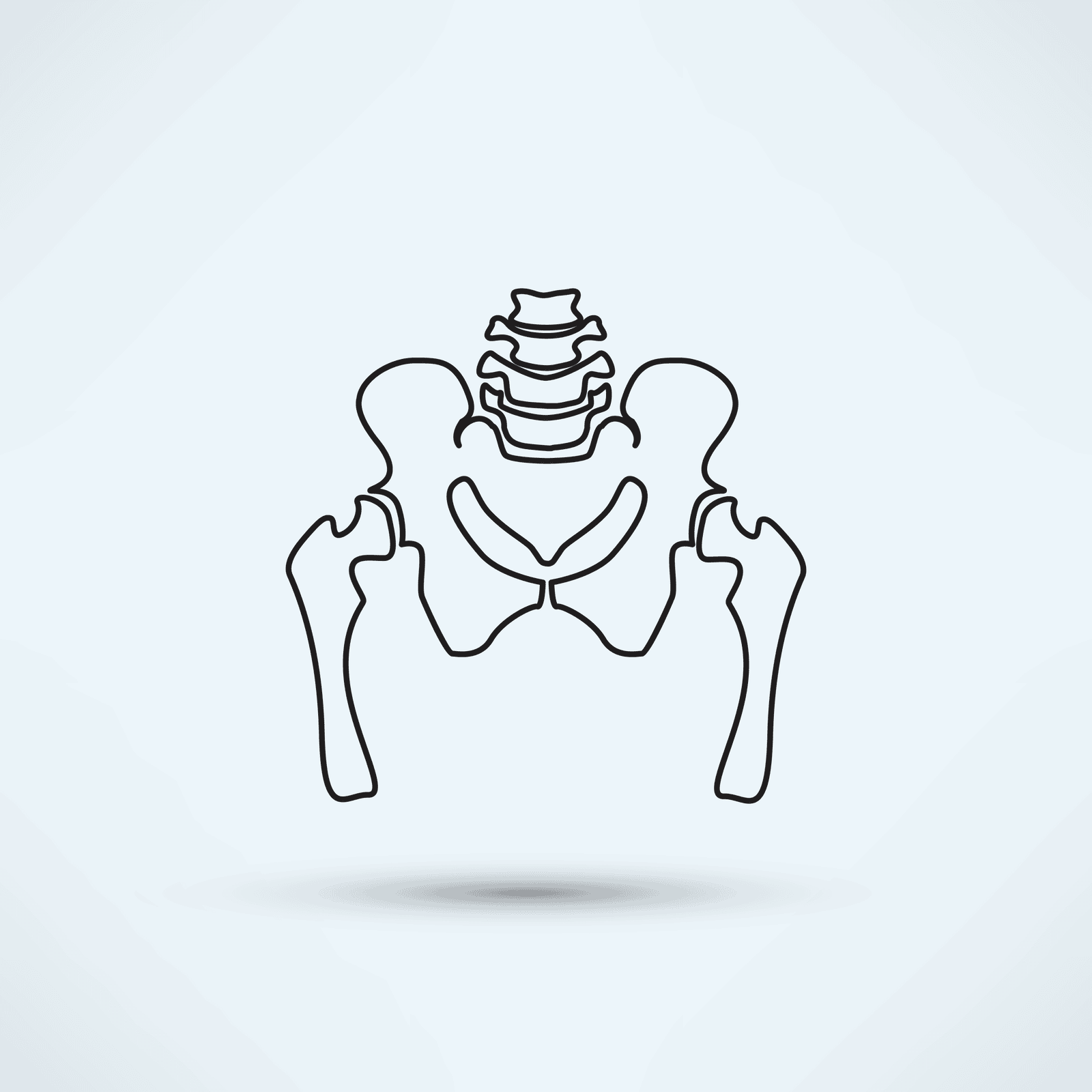
JOHN DULHUNTY: The study developed, tested and validated algorithms to calculate true dihedral angles from angles measured on radiographic images. The algorithms were designed for when the protocols developed to ensure reliable measurement of angular relationships were not met or were unable to be adhered to. The measurement of sacral obliquity on radiographic images was to develop algorithms to calculate the amount of correction needed to level the sacral base in upright standing and sitting postures.
Upper Cervical spine kinematics at the intersegmental level and the role of the Alar Ligaments
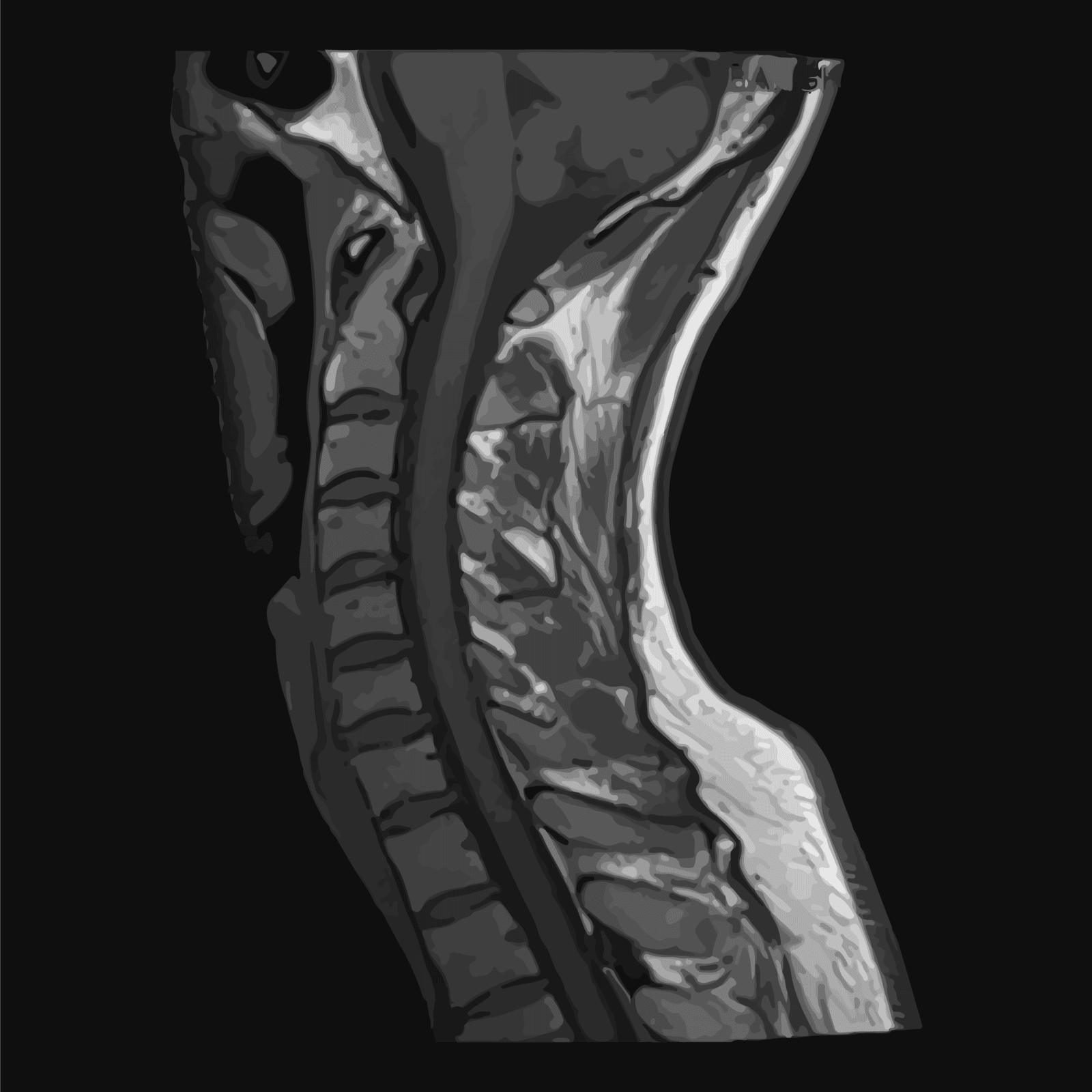
ANA ISABEL LORENTE CORELLANO: The objectives of this thesis were (1) to provide the intersegmental range of motion (ROM) of the upper cervical spine in lateral bending, axial rotation, and flexion-extension, (2) to analyze the effects of an alar ligament injury on the intersegmental mobility (with a unilateral ligament transection), (3) to assess the screening of this injury with in vitro manual tests (side-bending stress test and rotation stress test), and (4) to quantify how limiting the C0-C1 mobility influences the C1-C2 mobility.
This thesis has provided new insights related to two clinical tests (side-bending and axial stress tests) and has deepened the understanding of the biomechanics behind the effect clinically observed in C1-C2 mobility with C0-C1 mobilizations.
Normal neck motion
Keith Harvey CHARLTON: This thesis reveals sufficient differences in values in enough joints for the three different age cohorts representing the commonest age groups presenting with neck pain and related disorders, and in both genders, to render current catalogues of normal motion somewhat unsatisfactory. For normal sagittal plane local joint motion from C2-3 to C6-7 in the human neck, for rotation amplitude values, the Null Hypotheses that no such data in neck kinematics can show differences in values from age cohort to age cohort and/or from gender cohort to gender cohort are rejected. The Null Hypotheses for Instantaneous Axes of Rotation are confirmed.
Further, the thesis produces sufficient new evidence to propose more accurate ranges that can be considered as clinically relevant normals as the basis for investigations into clinical causes and assessment of treatment results for mechanically implicated neck pain and related disorders.

Developing chiropractic students clinical practice skills - elements of best practice : a qualitative exploratory descriptive study
Navine HAWORTH: Embedding evidence-based practice within curricula and clinical training for educators and students are necessary to ensure this becomes a part of clinical practice. Conclusion This thesis posits best practice in chiropractic clinical education consists of the following: (a) using a scaffolded longitudinal clinical program, (b) varying clinical placements and case mix, (c) supervision and mentoring from multiple clinical educators, (d) educating the clinical educator, (e) curricula designed around industry standards and desired graduate attributes and capabilities, (f) an evidence-based practice approach in the curricula and clinical context, (g) aligning business skills, knowledge and practices with the professional context and (h) interprofessional learning and practice opportunities. Although this study has made a contribution to scholarly discourse, there remain many gaps in our knowledge where further studies are needed.
Cite: Haworth N. Developing chiropractic students clinical practice skills - elements of best practice : a qualitative exploratory descriptive study. [Thesis]. Federation University. 2021. At http://researchonline.federation.edu.au/vital/access/HandleResolver/1959.17/176916
Managing Low Back Pain in older adults: A multi-country observational study
Alan David JENKS: Chapter 3 examines the validity, reliability, and responsiveness of three commonly used disability questionnaires (Roland-Morris Disability Questionnaire, Oswestry Disability Index, and Quebec Back Pain Disability Scale) in older adults undergoing chiropractic care for LBP. Findings indicate that all three indexes have sufficient reliability and validity, though each has unique strengths and limitations.
The final chapter presents the principal findings of the thesis, discussing their implications for clinical practice and future research. The strengths and limitations of the study are reviewed, and recommendations for optimizing chiropractic care for older adults with LBP are provided. Overall, this thesis contributes valuable real-world evidence on the clinical course, treatment outcomes, and healthcare utilization associated with chiropractic care for older adults with LBP. It underscores the importance of personalized, multidisciplinary care strategies to enhance the quality of life for this growing population.