
Concentrated Care
Select language here
Background:A 32-year-old female presented for care with chief complaints of Chronic Fatigue Syndrome, Hashimoto's Disease and infertility. She had undergone five failed rounds of IVF, suffered one ectopic pregnancy, and reported significant levels of psychological stress, and a history of injury and physical trauma.
Treatment: The patient presented for care at a facility specialising in concentrated chiropractic care where a regenerative chiropractic and functional neurological protocol is followed", and wide-ranging blood panels and other testing are used to establish a baseline for the patient. She undertook two separate weeks of concentrated care, seven months apart.
Outcomes: Three weeks after the second week of care, she underwent another round of IVF and was able to achieve a healthy pregnancy which is progressing well in its third trimester at the time of writing. No other significant changes to her medical history or management were noted during this time, only the inclusion of a course of concentrated chiropractic care.
Indexing Terms: Chiropractic; Subluxation; ligamentous laxity; Hashimoto’s Disease; pregnancy; conception
Cite: McIvor C, Postlethwaite R, Martin A, Kotlerman S. Improved fertility outcomes following multiple IVF failures in a patient with Chronic Fatigue Syndrome and Hashimoto’s Disease: A Case Report. Asia-Pac Chiropr J. 2023;4.1. apcj.net/Papers-Issue-4-1/#AverioHashimoto
Introduction
A central tenet of chiropractic care is that the brain is the master controller of the body, and that when we adjust subluxations, we eliminate distortions and allow the body to better express health. Included in this blanket statement is the regulation of the autonomic nervous system, and of the HPA axis, which is vital to hormonal and reproductive health.
Infertility, defined as the inability to achieve a pregnancy after 12 months or more of regular unprotected sexual intercourse, is a particularly emotive condition in which the underlying causes may be difficult to pinpoint. Two potential underlying factors are stress and hormonal dysregulation. Stress has been found to influence reproductive function ‘at all levels.’ (1) This link has been well-investigated, with libido, ovulatory capacity and implantation all impacted by psychological stress. (1) This being the case, specific hormonal and other aspects of the relationship between stress and infertility are difficult to conclusively examine, as methodologies, associations, and effect sizes vary between studies.
While the term ‘stress’ may refer to physical, chemical or mental/emotional stressors, much research is devoted to psychological stress and its contribution to infertility. Less prolific in the literature is the role of autonomic nervous system health and regulation, and its impact on reproductive or hormonal health. Basic science tells us that the HPA-axis (hypothalamic pituitary adrenal axis) is vital in both the human stress response and in the production of reproductive hormones. (2, 3)
Manual therapies such as acupuncture have been well-documented in the care for the female suffering from infertility. While the mechanisms behind any improvements linked to this therapy are yet to be conclusively established, the role of the hypothalamic-pituitary-ovarian axis is thought to be a potential factor. Specifically, it is thought that sympatho-inhibitory effects on the central nervous system may be significant. (4)
At present, no large-scale chiropractic research exists confirming the link between autonomic nervous system regulation, improved hormonal health and improved fertility outcomes. Thus case report data are significant in establishing anecdotal evidentiary support for larger studies that would allow the profession to make claims regarding fertility support.
With one in six people now thought to suffer from infertility, this issue is both significant and common and is an stress-inducing factor in and of itself. (5) Thus, it is vital that the chiropractic evidence for fertility care expands to meet the magnitude of the problem. The present case contributes to case report data on improved fertility outcomes concomitant with chiropractic care.
Case details
A 32-year-old female presented for chiropractic care under a concentrated care protocol. A videographer by trade she had a low activity level and was a regular recipient of chiropractic care. She had a two-year history of Chronic Fatigue Syndrome (CFS) and brain fog, had suffered from General Anxiety Disorder since childhood, and had a recent diagnosis of Hashimoto’s Disease. Her main reason for seeking care was originally focused on CFS. Following a discussion on the potential for the nervous system to affect her ability to regulate hormonal systems, thus impacting fertility, a chief complaint of persistent infertility was established.
Upon presentation a thorough history and examination were undertaken. The patient had a history of several years of regular manual chiropractic care, and her prior chiropractor had told her that her neck ‘was very straight, and there was likely nothing that could be done’. Fertility and hormonal health had been a long standing issue, with infertility and a diagnosis of Polycystic Ovarian Syndrome (PCOS) leading to five failed IVF attempts, including one in the three months prior to presenting for care. She had also suffered an ectopic pregnancy in the past.
Significant traumas in her health history included a roll-over car accident in 2011 (ten years prior to presentation), as well as more than ten skiing and snowboarding falls in her past.
The patient self-reported a past use of tobacco (2005-2009, social use), marijuana (2005-2008), alcohol (2005-2015), and street drugs (2005-2008, socially). She had maintained a full schedule of vaccination and no food allergies. There was also reported mould exposure for one year (2017-2018) in her place of employment.
Past medical treatments (in addition to recovery from the accidents listed above) included past use of hormone therapy and SSRIs. She also reported an extended history of mental and emotional stress/abuse.
Clinical findings
Blood labs were taken at the commencement of care and returned normal findings, with the exception of high lymph and high albumin levels. High levels of wheat sensitivity were revealed on an intestinal permeability blood lab test. Micronutrient panels revealed serum deficiency of K1, Serine (a food-based deficiency) and a cellular deficiency of B5 and K1. Cellular deficiencies were detected inside White Blood Cells and may be due to neurological dysfunction and causing dysfunction in the immune system. A high AA/EPA ratio was found, indicating systemic inflammation.
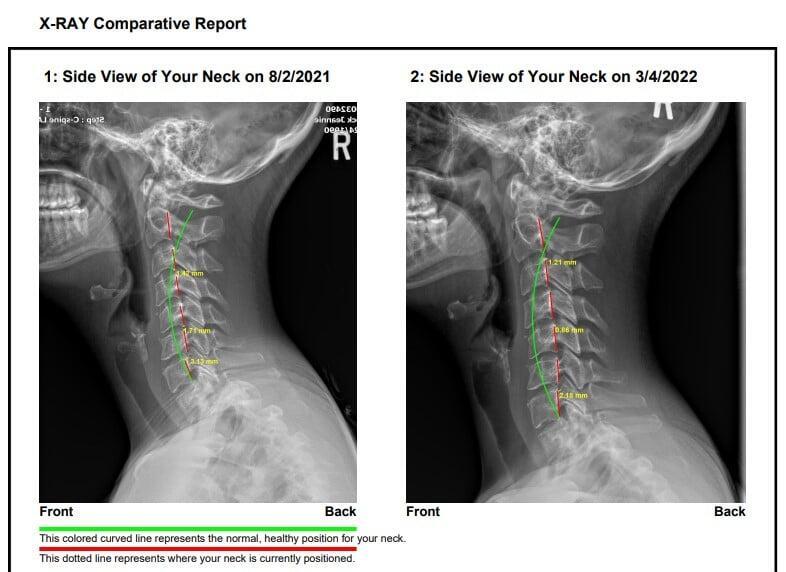
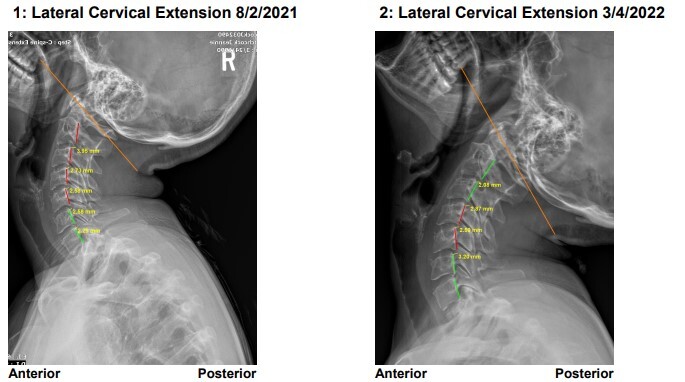
Abnormal heart sounds were detected, and abnormal Fukuda’s tests were returned. Ligament instability was noted at C1-C2, C2-C3, C3-C4, C4-C5 in both flexion and extension. AMA guidelines state that a single area of ligament instability in the cervical spine is a 25-28% whole body impairment due to the compromise to the central nervous system. As attached images reveal, ligament instability readings were significantly higher than this benchmark, ranging from 47.9% at C2-3, C3-4 and C5-6. The largest change seen post treatment was the regeneration of torn ligaments in the cervical spine (see Images).
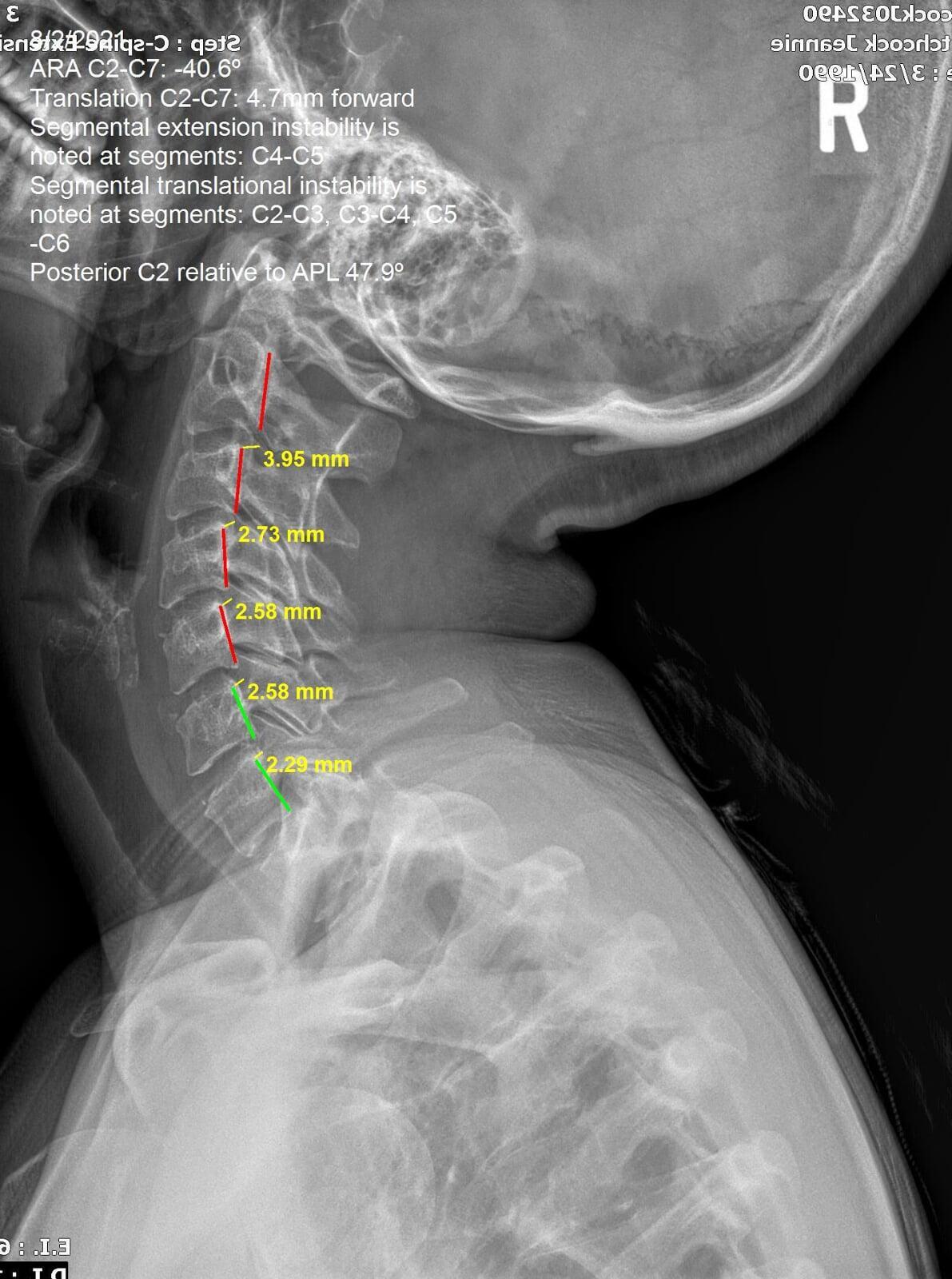
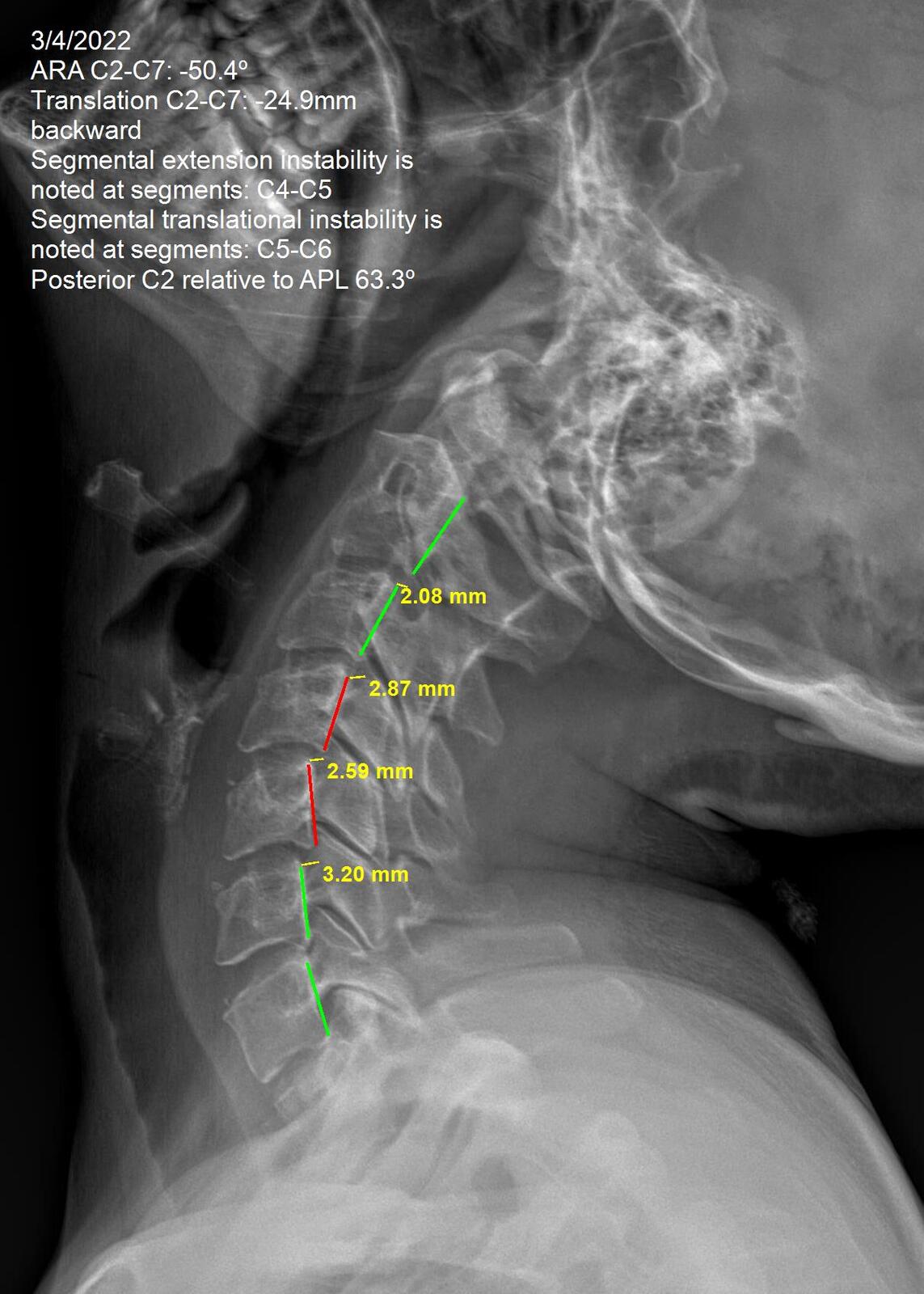
Additionally, an abnormal (straight) C-spine alignment was noted. Subluxation findings were returned throughout C1-C7. (See Images)
Management
A management plan encompassing two weeks of concentrated care was agreed upon, in which the Averio Functional Neurological Technique was deployed. Adjustments were delivered via low-level force sustained contact in areas of subluxation (i.e throughout the C-spine).
Additional care recommendations included activity limitations. The patient received multiple chiropractic adjustments, photobiomodulation treatments, and other complementary treatments during her two weeks of concentrated care. The first week was in August of 2021, and the second was in March of 2022. During the first week, 88 Averio Functional Neurologial Technique adjustments were delivered. During the second week, 58 were delivered.
Outcomes
Clinical findings included a notable improvement in ligament stability as well as reduced systemic inflammation and improved functional neurological tests and heart sound tests. However, the most meaningful and significant finding was that the patient was able to conceive three weeks after the completion of her second round of care. Furthermore, the baby was born without medical intervention and without complications.
Given the five failed rounds and the ectopic pregnancy, it is plausible that the systemic picture of health, regulation and nervous system function was part of this successful outcome, especially given the patient had made no other meaningful changes to her regime.
Discussion
Numerous observations non-related to the core reasons for presentation make this case interesting, although according to the chiropractic paradigm, it is rare that any one issue occurs in a vacuum. The patient had undiagnosed ligament instability in multiple areas of her cervical spine. She had been seeing a manual adjusting chiropractor regularly for years, during which time radiographs had been taken but not analysed. Due to the chronicity of the patient’s health concerns (with some going back to childhood), it is likely that some part of her ligament instability was developmental and that the patient had been dealing with spinal dysfunction and subluxation and corresponding abnormal inflammation since childhood. Ligament instability is often missed in the diagnostic process and may contribute significantly to inflammation and central nervous system irritation. (6)
Also of note in this case report is the presence of Hashimoto’s Disease, which is an autoimmune disease due to abnormal neurological regulation. Given the impact of ligament instability on inflammation and nervous system irritability, it is therefore feasible that this patient's diagnosis is directly related to the various levels of cervical spine ligament instability and the corresponding subluxations due to the spinal damage. It is also likely that the abnormal spinal structure noted in the patient AP lumbar films is compensation damage due to the cervical spine abnormalities. This provided the rationale as to why the focus of care for this patient was the cervical spine.
Through concentrated chiropractic care (non-manual), the cervical spine was allowed an opportunity to regenerate closer to normal structure, ligament function and tissue and this regenerative effort reduced the patient's inflammatory load.
What this ultimately meant for the patient was that she was able to fall pregnant a few weeks after her second Averio week of care when she had previously had five failed rounds of IVF over several years. She is currently carrying in her third trimester with no complications to her pregnancy or her health during the pregnancy. This is a case of i) missing degenerative ligament instability and ii) needing to prescribe a much greater frequency of chiropractic care in order for the patient to respond.
Conclusion
While further research is required to confirm and explain the mechanisms that may underpin improvements in fertility outcomes concomitant with chiropractic care, and while we cannot make generalisations based on single case reports, it appears that chiropractic care may have been a significantly related factor in this case.
It is important to note, though, that the occasional adjustment over time did not achieve this response for the patient. This case required a deeper diagnostic investigation process, including objective tests and action steps for the patient to modify their inflammation levels (ie cutting out gluten when the patient has a severe sensitivity to gluten). Most importantly, it required the creation of an opportunity for the patient to receive enough timely chiropractic care to see the regeneration of tissues and structural alignment. When we see that occurring in the system, it is likely that organ function and tissue regeneration will soon follow.
It is important for the discipline that subluxation-based chiropractic care be established in the literature as a safe and effective treatment option for function loss in conditions such as infertility.
References
- Luba Sominsky, Deborah M Hodgson, Eileen A McLaughlin, Roger Smith, Hannah M Wall, Sarah J Spencer, Linking Stress and Infertility: A Novel Role for Ghrelin, Endocrine Reviews, Volume 38, Issue 5, 1 October 2017, Pages 432–467, https://doi.org/10.1210/er.2016-1133
- Spencer SJ, Tilbrook A. The glucocorticoid contribution to obesity. Stress. 2011;14(3):233–246.
- Papadimitriou A , Priftis KN . Regulation of the hypothalamic-pituitary-adrenal axis. Neuroimmunomodulation. 2009;16(5):265–271
- Chang, R., Chung, P., and Rosenwaks, Z., (2002). Role of acupuncture in the treatment of female infertility. Fertility and Sterility. Vol. 78, Is. 6, Dec 2002, pp. 1149-1153, https://doi.org/10.1016/S0015-0282(02)04348-0
- World Health Organisation, (2022). Infertility Prevalence Estimates, 1990-2021. World Health Organisation, https://www.who.int/publications/i/item/978920068315
- McIvor C, Postlethwaite R, Kolterman S, Martin A. Depression, ligament Instability and chronic pain improvement concomitant with a course of concentrated Chiropractic Care: A Case Report. Asia-Pac Chiropr J. 2023;3.3 www.apcj.net/Papers-Issue-3-3/#AverioDepressionChronicPain